


For European FEC owners, arcade machine warranty is rarely viewed as a simple after-sales promise, but rather as a clear indicator of operational risk, supplier accountability, and long-term cost control.
Unlike emerging markets where buyers may prioritize initial price, European operators typically evaluate machines from a lifecycle perspective, focusing on compliance, downtime risk, and service continuity, which naturally makes warranty terms a core decision factor rather than an afterthought.
In 2026, warranty length and structure are increasingly used by European buyers as a practical way to assess whether a supplier truly understands commercial-grade operation.
European FECs operate under relatively strict regulatory, safety, and consumer protection environments, where equipment reliability directly affects not only revenue but also brand reputation and compliance responsibility.
As a result, European buyers tend to interpret warranty coverage as a reflection of how confident a manufacturer is in its own production quality, internal testing standards, and spare parts compatibility over time, rather than as a symbolic gesture attached to the sales contract.
A warranty that is too short or vaguely defined often signals higher hidden risk, especially for venues operating machines daily under high usage frequency.
Experienced European buyers rarely evaluate warranty in isolation, because they understand that a long warranty without real technical support has limited practical value.
Instead, they look at whether the warranty is backed by factory-level engineering, documented troubleshooting procedures, and stable spare parts availability, ensuring that any covered issue can actually be resolved efficiently rather than delayed through layered communication.
This evaluation approach explains why many European FEC owners increasingly prefer to work directly with manufacturers rather than intermediaries.
Based on real buyer discussions and cooperation experience, European FEC owners generally expect arcade machine warranties to meet several practical criteria.
| Warranty Aspect | European Buyer Expectation |
|---|---|
| Warranty Length | Covers early and mid-stage operation |
| Coverage Clarity | Clear definition of parts and support |
| Technical Response | Direct and professional |
| Spare Parts Availability | Stable and long-term |
| Responsibility | Clearly assigned to manufacturer |
In real operation, many functional or component-related issues do not appear immediately after installation, but instead emerge after extended daily use, particularly in high-traffic FEC environments.
A two-year warranty therefore covers the most critical operational phase, during which machines are fully integrated into venue workflows and revenue expectations are clearly established, making it far more meaningful than shorter warranty periods that expire before real usage patterns are fully tested.
For this reason, a clearly defined two-year warranty is often perceived by European buyers as a sign of manufacturing confidence rather than an aggressive sales incentive.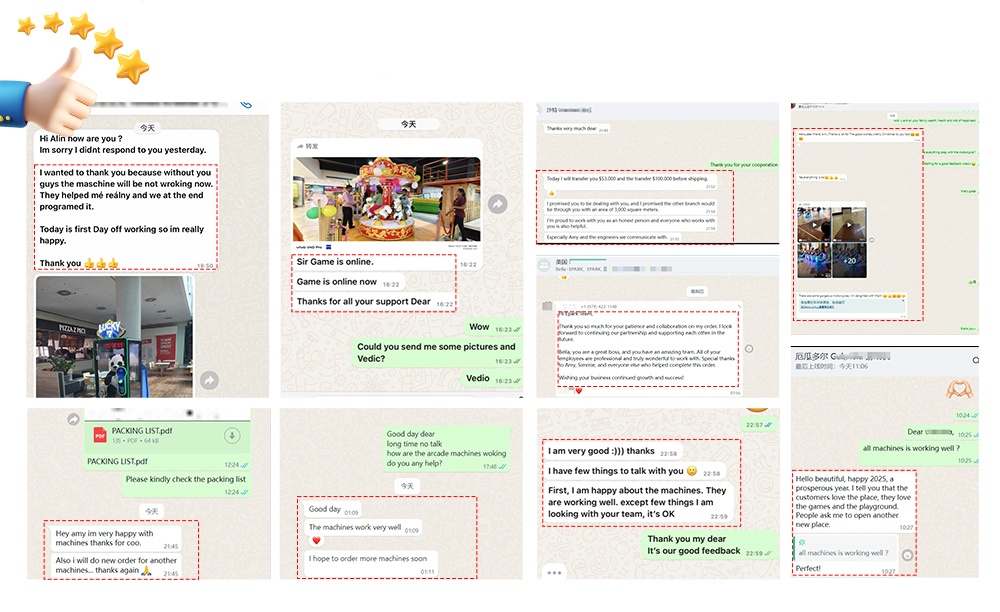
European buyers are generally cautious about warranty terms that depend on third-party relationships, because responsibility can become unclear if the original production source changes or cooperation ends.
Factory-issued warranties, by contrast, are backed by direct control over engineering documentation, component sourcing, and production records, which significantly reduces uncertainty during the warranty period and beyond.
This is one of the reasons why manufacturers such as EPARK, which provide a factory-backed two-year warranty, are increasingly viewed as more reliable long-term partners by European FEC operators.
European FEC owners tend to evaluate warranty in the context of total ownership cost, understanding that downtime, delayed repairs, or unclear responsibility can quickly exceed the initial price difference between suppliers.
From this perspective, a longer and well-supported warranty effectively reduces financial uncertainty by converting unpredictable maintenance costs into manufacturer-backed responsibility during the most sensitive operational period.
This approach explains why many European buyers are willing to pay slightly more upfront in exchange for clearer warranty coverage and reliable after-sales support.
Is a longer warranty always better?
A longer warranty is only valuable when it is backed by real factory support, spare parts availability, and clear responsibility, which is why European buyers focus on structure rather than duration alone.
Why do European buyers prefer factory-backed warranties?
Because factories control production, documentation, and parts supply directly, reducing uncertainty and response time during the warranty period.
Is a two-year warranty standard for commercial arcade machines?
In professional FEC environments, a two-year warranty is increasingly viewed as a reasonable and responsible standard for commercial-grade equipment.
 Why Photo Booths Are Becoming Entertainment Attractions Again
 Best Redemption Games for Family Entertainment Centers
